Too many toolbox talks are a box-ticking exercise. Workers stand in a circle, the supervisor reads from a generic sheet, eyes glaze over, and everyone returns to the job still unclear about real risks. This isn’t just ineffective—it’s dangerous.
A solid health and safety toolbox talk template doesn’t just inform; it engages, educates, and empowers. It turns a routine meeting into a moment of real risk prevention. The difference? Structure, relevance, and clarity.
This guide delivers a battle-tested toolbox talk template that works in real-world environments—from construction sites to manufacturing floors—along with actionable strategies to avoid common mistakes and drive behavioral change.
What Is a Toolbox Talk (And Why It Matters)
A toolbox talk is a short, focused safety meeting—usually 10 to 15 minutes—conducted at the job site before work begins. It addresses specific hazards, reinforces safe practices, and promotes a culture of safety awareness.
Unlike lengthy safety trainings, toolbox talks are timely, task-specific, and designed for immediate application.
Why they matter: - Reduce on-the-job incidents by up to 25% when done consistently (NSC data) - Improve hazard recognition in high-risk environments - Support compliance with OSHA, HSE, and other regulatory standards - Encourage two-way communication between crews and supervisors
But without a structured approach, even well-intentioned talks fall flat. That’s where a strong template becomes critical.
Core Elements of an Effective Toolbox Talk Template
A high-impact toolbox talk isn’t just a checklist. It’s a communication tool built around these key components:
1. Topic & Date Keep it visible. Workers should instantly know what the talk covers and when it was delivered.
2. Job-Specific Relevance Generic messages like “Stay safe today” are useless. Focus on the actual task: trenching, working at height, electrical hazards during equipment maintenance, etc.
Example: Instead of “Forklift Safety,” use “Forklift Operations Near Pedestrian Zones on the East Loading Dock.”
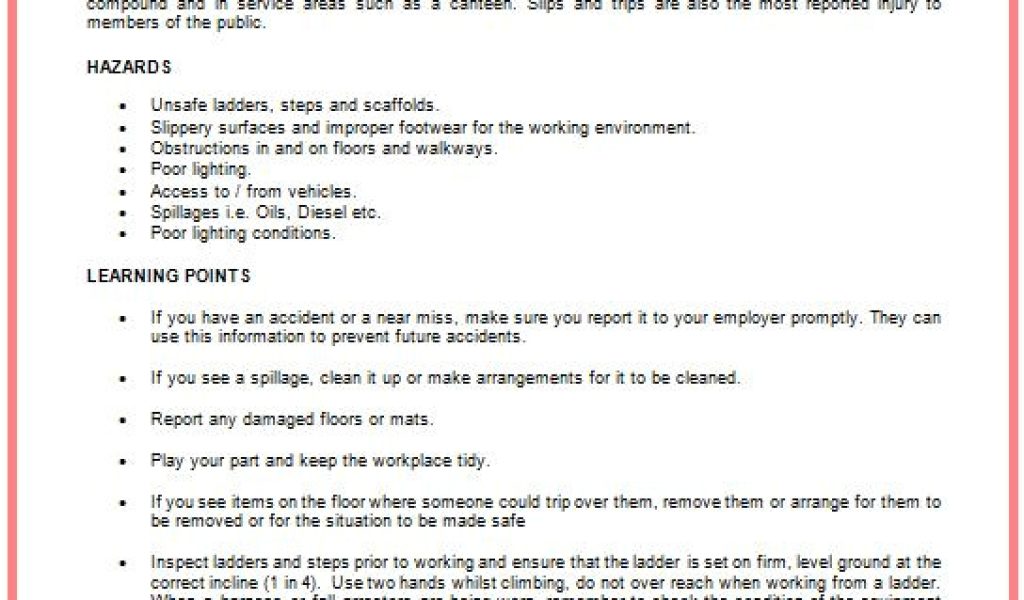
3. Hazard Identification List 2–3 specific hazards related to the day’s work. Be concrete:
❌ “Slips and falls” ✅ “Wet concrete spill near crane access point creating slip risk”
4. Safe Work Practices Outline clear, actionable behaviors:
- Use designated walkways
- Report spills immediately
- Wear high-traction boots
Avoid vague directives like “be careful.”
5. Discussion Prompts Build engagement with open-ended questions:
- “Has anyone seen a similar hazard before? How was it handled?”
- “What would you do if you noticed an unmarked oil leak on the lift path?”
This transforms passive listeners into active participants.
6. Attendance & Sign-Off Document who attended. This supports compliance and accountability. Include: - Name - Role - Signature or initials - Date and time
The Ultimate Health and Safety Toolbox Talk Template
Use this ready-to-deploy template across shifts and teams. Customize the bracketed sections daily.
Toolbox Talk: [Topic] Date: [Date] Time: [Start Time] Location: [Site/Zone] Facilitator: [Name/Role]
Today’s Work Activity: [Describe the specific task or operation—e.g., “Installing rebar on Level 3 slab”]
Identified Hazards: - [Hazard 1 – e.g., “Unprotected edge near formwork”] - [Hazard 2 – e.g., “Overhead crane movement in shared zone”] - [Hazard 3 – e.g., “Trip hazard from loose tie wire”]
Control Measures in Place: - [Control 1 – e.g., “Guardrails installed on all open edges”] - [Control 2 – e.g., “Spotters assigned during crane lifts”] - [Control 3 – e.g., “Debris cleared every 2 hours”]
Safe Work Practices – What We’ll Do Today: - [Action 1 – e.g., “Never bypass safety interlocks on saws”] - [Action 2 – e.g., “Use gloves when handling rebar ends”] - [Action 3 – e.g., “Verify PPE: hard hat, hi-vis, steel-toe boots”]
- Discussion Questions:
- What near-miss could happen if we skip the pre-lift checklist?
- How can we better communicate when moving materials through congested areas?
- What’s one thing we can improve from yesterday’s safety performance?
Emergency Reminder: - Nearest first aid kit: [Location] - Emergency contact: [Phone/Name] - Assembly point: [Designated zone]
Attendance:
| Name | Role | Signature | Time In |
|---|---|---|---|
| [John Doe] | Ironworker | [Initials] | 7:02 AM |
| [Jane Smith] | Supervisor | [Initials] | 7:00 AM |
| ... | ... | ... | ... |
Common Mistakes That Undermine Toolbox Talks
Even with a good template, execution flaws can kill effectiveness. Avoid these:
❌ Reusing the Same Topics Weekly Crews tune out when talks feel repetitive. Rotate topics monthly and align them with seasonal or project-phase risks (e.g., heat stress in summer, icy walkways in winter).
❌ One-Person Monologue If the supervisor does all the talking, you’ve lost engagement. Use prompts to invite input. Silence should be uncomfortable.
❌ No Follow-Up Discussing a hazard is only step one. Walk the site after the talk to verify controls are in place. Ask: “Did we do what we said we’d do?”
❌ Ignoring Near-Misses Use real incidents from your site or industry. Example: “Last week, a ladder slipped on wet decking—we’re reviewing ladder placement and surface checks today.” This builds credibility.
❌ Poor Documentation Unsigned sheets or missing dates create compliance gaps. Store completed talks digitally or in binders for audits.
When to Customize the Template
The base template works across industries—but smart teams adapt it. Consider these adjustments:

For High-Risk Tasks (e.g., Confined Space Entry) Add: - Permit-to-work status - Rescue plan recap - Gas monitor calibration check
For New Crews or Contractors Include: - Site-specific rules - Emergency evacuation routes - Buddy system assignments
For Multilingual Teams Print the template in relevant languages or use visual aids. A photo of a correct vs. incorrect setup can communicate faster than words.
5 Free & Practical Toolbox Talk Resources
While the template above works standalone, supplement it with reliable content sources. These platforms offer editable, field-tested topics:
- OSHA.gov (U.S. Department of Labor)
- - Pros: Official, compliant, free PDFs
- - Cons: Can be overly technical; needs simplification for crews
- - Best for: Regulatory alignment and baseline topics
- Safe Work Australia – Toolbox Talk Hub
- - Pros: Practical, bilingual summaries, hazard-specific
- - Cons: Geared toward Australian standards
- - Best for: Adapting content for international teams
- NIOSH (CDC) Topic Pages
- - Pros: Science-backed, excellent for health hazards (e.g., silica, noise)
- - Cons: Less formatted for direct delivery
- - Best for: Supplementing talks with health data
- Construction Safety Network (CSN News)
- - Pros: Weekly updated talks, real-world examples
- - Cons: Subscription-based for full access
- - Best for: Staying current on trending risks
- SafetyCulture (iAuditor) Template Library
- - Pros: Digital, customizable, integrates with mobile inspections
- - Cons: Full features require app usage
- - Best for: Teams going paperless
Use these to stay fresh—don’t reinvent the wheel daily.
Making Toolbox Talks Stick: 3 Workflow Tips
Great talks don’t happen by accident. Build them into your operation:
1. Schedule It Like a Critical Task Treat the toolbox talk as non-negotiable as equipment inspection. Block 15 minutes in the daily schedule. No exceptions.
2. Rotate Facilitators Let experienced workers lead occasionally. It builds ownership and reveals frontline insights. Provide a facilitator guide to keep it structured.
3. Review & Improve Monthly Pull last month’s talks. Ask:
- Which topics led to behavioral changes?
- Were hazards actually addressed?
- Did attendance drop on certain days?
Adjust topics, timing, and delivery based on real feedback.
Final Thought: A Template Is Only as Strong as Its Execution
A health and safety toolbox talk template isn’t just a document—it’s a catalyst for conversation, awareness, and accountability. The one provided here gives you structure, but your team’s commitment brings it to life.
Use it. Adapt it. Own it. And never treat safety as a formality.
Start tomorrow with a focused talk on today’s real risk—not yesterday’s generic script. That’s how incidents are prevented, one conversation at a time.
Frequently Asked Questions
What is the best length for a toolbox talk? Aim for 10 to 15 minutes. Long enough to cover risks, short enough to hold attention.
How often should toolbox talks be held? Daily for high-risk sites; weekly for lower-risk environments. Increase frequency after incidents or during new phases.
Can toolbox talks replace formal safety training? No. They reinforce training but don’t substitute for certified programs like fall protection or lockout/tagout.
Who should lead a toolbox talk? Supervisors typically lead, but trained crew members can facilitate with oversight.
Should toolbox talks be documented? Yes. Attendance records prove compliance during audits and support incident investigations.
How do you keep toolbox talks engaging? Use real examples, ask open questions, include visuals, and rotate topics frequently.
Can you use digital tools for toolbox talks? Yes. Apps like SafetyCulture or Site Docs allow digital sign-in, photo uploads, and cloud storage—ideal for remote teams.
FAQ
What should you look for in Health and Safety Toolbox Talk Template That Works? Focus on relevance, practical value, and how well the solution matches real user intent.
Is Health and Safety Toolbox Talk Template That Works suitable for beginners? That depends on the workflow, but a clear step-by-step approach usually makes it easier to start.
How do you compare options around Health and Safety Toolbox Talk Template That Works? Compare features, trust signals, limitations, pricing, and ease of implementation.
What mistakes should you avoid? Avoid generic choices, weak validation, and decisions based only on marketing claims.
What is the next best step? Shortlist the most relevant options, validate them quickly, and refine from real-world results.