Workers on construction sites in NSW often face dynamic risks—working at height, operating machinery, handling hazardous materials. Even experienced crews can overlook dangers without regular safety reinforcement. That’s where a well-structured toolbox talk template NSW becomes essential. Unlike generic safety documents, a localized template aligns with Work Health and Safety (WHS) regulations in New South Wales, ensuring relevance, legal compliance, and real-world effectiveness.
A good template isn’t just a formality. It’s a practical conversation starter—short, focused, and tailored to the day’s work. When done right, these brief discussions reduce incidents, improve team awareness, and create a culture where safety is part of the daily rhythm.
This guide delivers actionable templates, common pitfalls, and field-tested strategies to help supervisors and safety officers run meaningful toolbox talks across NSW worksites.
Why NSW Workplaces Need More Than a Generic Template
Many sites use one-size-fits-all toolbox talk templates downloaded from international sources. That approach risks irrelevance. Regulations, job types, and local hazards in NSW—especially across Sydney, Newcastle, and regional areas—differ from other jurisdictions.
For example, elevated humidity in coastal zones affects electrical safety protocols. Urban high-rise projects in Parramatta face different fall risks than rural roadworks near Dubbo. A NSW-specific template accounts for these subtleties.
Additionally, SafeWork NSW mandates that PCBU (Person Conducting a Business or Undertaking) ensure workers are consulted on health and safety matters. Toolbox talks are a primary vehicle for this consultation. Using a template that reflects NSW legislation strengthens legal defensibility during audits or incident investigations.
Insight: A template that references AS/NZS 4801 or NSW WHS Act 2011 shows due diligence. Generic versions often miss this.
Core Elements of an Effective Toolbox Talk Template
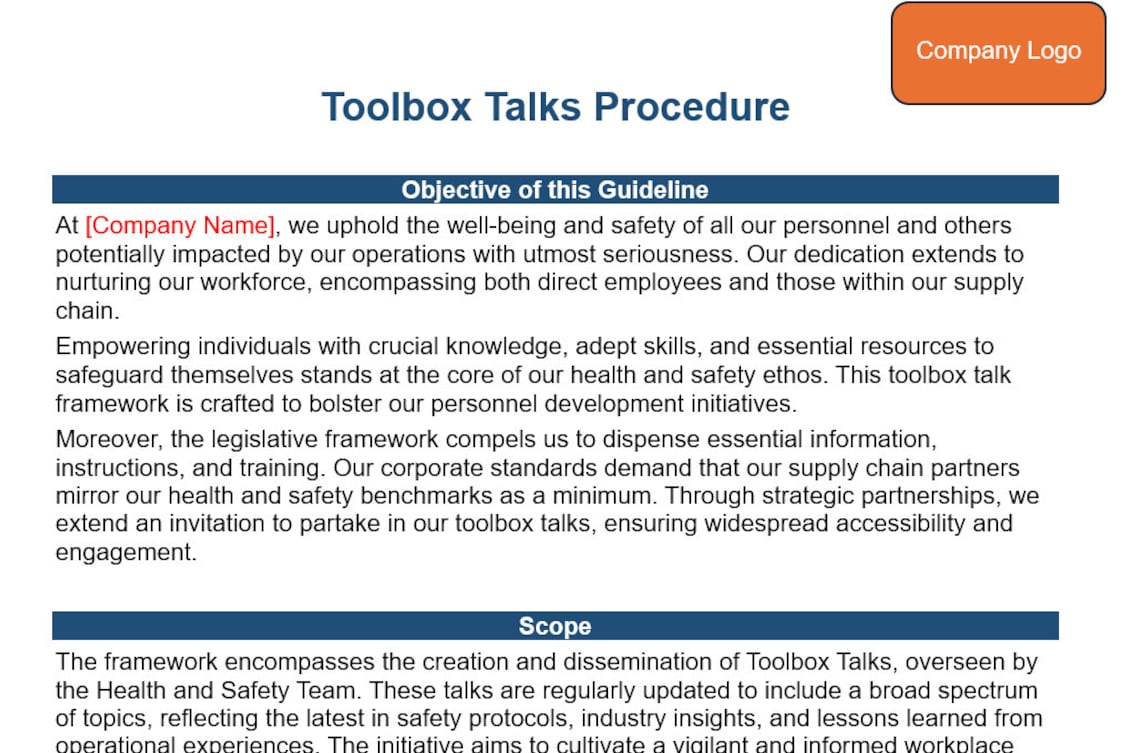
A strong toolbox talk template NSW must be concise but comprehensive. It should prompt discussion—not just check boxes. Here’s what to include:
#### 1. Topic and Date Clearly state the safety focus (e.g., “Working at Heights”) and date. This creates a record for compliance.
#### 2. Location and Crew Note the site address and list attending workers. This supports incident tracing and accountability.
#### 3. Key Hazards Outline 2–4 specific risks tied to the task. For example, scaffolding instability, unsecured tools, or weather conditions.
#### 4. Control Measures List actions taken: harness use, barricading, equipment checks. Be specific—“Inspect edge protection before shift” not “Be safe.”
#### 5. Worker Feedback Section Include space for workers to raise concerns or suggest improvements. This fulfills SafeWork NSW consultation requirements.
#### 6. Sign-Off Area Signatures from supervisor and attendees confirm participation. Digital or paper-based, this is critical for records.
Avoid overloading the template. Keep it to one page. Workers won’t engage with a five-point essay at 6:45 a.m. before a crane lift.
Real-World Example: Excavation Work in Western Sydney
A civil contractor preparing for trenching in Penrith used a NSW-tailored template. The talk covered:

- Hazard: Risk of trench collapse due to unstable soil.
- Control: Excavation sloped to 45°, spotter assigned, no personnel in trench during dig.
- Local Factor: Recent rainfall increased soil saturation—highlighted as a trigger for reassessment.
Workers added that access to emergency shoring kits was unclear. The supervisor updated site plans that afternoon. This isn’t just compliance—it’s proactive risk management.
Compare this to a generic “Excavation Safety” PDF with global stats and unrelated images: zero engagement, minimal impact.
Common Mistakes That Undermine Toolbox Talks
Even with a good template, poor execution kills effectiveness. Watch for these patterns:
- Rote Reading: Supervisors reciting points without discussion. Workers zone out.
- Fix: Pose questions—“What would you do if the trench wall cracked?”
- One-Size Topic Every Week: “PPE” every Monday loses relevance.
- Fix: Rotate topics based on upcoming tasks. Use a 12-week safety cycle plan.
- Missing Signatures or Records: No proof of delivery weakens WHS compliance.
- Fix: Use digital tools or binders stored on-site. Audit monthly.
- Ignoring Worker Input: If concerns go unrecorded, trust erodes.
- Fix: Assign a note-taker. Follow up on suggestions within 48 hours.
- Using Outdated Templates: Older formats may ignore recent regulatory updates or high-risk incidents.
- Fix: Review all templates quarterly against SafeWork NSW alerts.
5 Practical Toolbox Talk Templates for NSW Sites
Below are five focused, legally-aligned templates adaptable to various NSW industries:
| Template | Best For | Key NSW Relevance |
|---|---|---|
| 1. Working at Heights | Roofers, window installers, telecoms | Aligns with Part 4.4 of NSW WHS Regulation; references guardrail standards |
| 2. Manual Handling | Warehousing, landscaping, concreting | Covers strain injuries—top cause of NSW workers’ comp claims |
| 3. Hot Works (Welding, Grinding) | Metal fabricators, maintenance crews | Addresses fire risk near flammable materials; references hot work permits |
| 4. Plant and Machinery Operation | Earthmoving, crane operators | Emphasizes pre-start checks per AS 2550 series |
| 5. Confined Spaces Entry | Utilities, drainage, tunnelling | Links to SafeWork NSW Code of Practice and permit requirements |
Each should include space for weather conditions, shift changes, and any near-misses from the previous day. Customize with company branding and site-specific photos for better engagement.
Digital vs. Paper: Choosing the Right Format
Many NSW contractors now use digital platforms for toolbox talks. Apps allow photo uploads, real-time sign-offs, and cloud storage. This is especially useful for multi-site operators.
Pros of Digital: - Instant reporting to safety managers - Reduces lost paperwork - Enables analytics (e.g., most-discussed hazards)
Pros of Paper: - No Wi-Fi needed—critical in remote areas - Workers more likely to annotate or draw diagrams - Familiar process; lower training barrier
Hybrid models work best. Use tablets on urban sites, paper in bushland or tunneling. Whatever format, ensure it’s accessible and consistently stored for at least two years—SafeWork NSW’s recommended retention period.
Workaround Tip: For paper users, scan completed sheets weekly and store digitally. Label folders by site and month.
How to Train Supervisors to Lead Better Talks
A template is only as strong as the person using it. Supervisors often lack training in facilitation. Result? Monologues, not dialogues.
Invest in brief coaching sessions focused on:
- Opening Strong: Start with a specific observation—“I saw a ladder near power lines yesterday. Let’s talk safe setup.”
- Encouraging Participation: Ask open questions: “Has anyone dealt with similar conditions before?”
- Time Management: Keep it under 10 minutes. Use a timer.
- Follow-Up Actions: Assign one measurable outcome: “By noon, all extension cords must be elevated off wet ground.”
Pair new supervisors with seasoned safety leads for shadowing. Evaluate effectiveness through worker feedback surveys—anonymous ones yield honest insights.
Integrating Templates into Daily Workflow
The best template fails if it’s buried in a folder. Success comes from integration:
- Schedule in Advance: Plan topics weekly based on work programs.
- Attach to SWMS: Link each toolbox talk to the Safe Work Method Statement for the task.
- Display Reminders: Use whiteboards in site huts to show that day’s topic.
- Audit Usage: Randomly check 3–5 talks per month for completeness and relevance.
One electrical subcontractor in Wollongong reduced incidents by 40% within six months simply by aligning weekly talks with job phases and assigning rotating lead speakers.
Final Checklist: Is Your NSW Toolbox Talk Template Effective?
Before rolling out or updating your template, verify it meets these criteria:
- [ ] References NSW WHS legislation or codes of practice
- [ ] Includes space for worker questions/concerns
- [ ] Covers site-specific or task-specific hazards
- [ ] Uses plain language—no jargon
- [ ] Fits on one page (digital or print)
- [ ] Has signature and date fields
- [ ] Is reviewed and updated at least twice a year
Use this guide to refine your approach. A toolbox talk template NSW isn’t paperwork—it’s a frontline safety tool. When designed well and delivered with intent, it protects lives, satisfies regulators, and builds a stronger safety culture across your team.
Start today: adapt one template, test it with your crew, and gather feedback. Small changes create lasting impact.
FAQ
What is a toolbox talk template in NSW? It's a structured guide used to conduct short safety meetings on construction or industrial sites in New South Wales, aligned with local WHS laws and common regional hazards.
Are toolbox talks mandatory in NSW? While not explicitly mandated by name, regular safety communication is required under the NSW WHS Act. Toolbox talks are the standard method to meet consultation and training obligations.
Can I use a free toolbox talk template from the internet? Yes, but ensure it reflects NSW regulations and your specific work. Many free templates are outdated or internationally based—customize before use.
How often should toolbox talks be held in NSW? Ideally daily or at the start of each new task. High-risk activities require a talk before work begins.
Who should lead a toolbox talk? Supervisors, site managers, or safety officers. The lead should be trained, knowledgeable, and able to encourage team input.
Should toolbox talk records be kept? Yes. Signed records must be retained for at least two years for compliance and audit purposes.
Can toolbox talks be done digitally in NSW? Absolutely. Digital formats are accepted and often improve record-keeping, provided they include sign-offs and are securely stored.
FAQ
What should you look for in Toolbox Talk Template NSW: Practical Guides for Safer Sites? Focus on relevance, practical value, and how well the solution matches real user intent.
Is Toolbox Talk Template NSW: Practical Guides for Safer Sites suitable for beginners? That depends on the workflow, but a clear step-by-step approach usually makes it easier to start.
How do you compare options around Toolbox Talk Template NSW: Practical Guides for Safer Sites? Compare features, trust signals, limitations, pricing, and ease of implementation.
What mistakes should you avoid? Avoid generic choices, weak validation, and decisions based only on marketing claims.
What is the next best step? Shortlist the most relevant options, validate them quickly, and refine from real-world results.